A broken boiler is one of the most disruptive household emergencies, particularly during autumn and winter. Access Plumbing & Boilers provides Gas Safe boiler repair across Muswell Hill and the N10 postcode, diagnosing the actual fault before any work begins so you know exactly what is wrong and what it will cost to fix.
Boiler faults range from straightforward component failures to more complex system problems that require careful diagnosis. Access Plumbing & Boilers carries out boiler repairs for all types of domestic boiler — combi boilers, system boilers and conventional boilers — working on all major manufacturers including Worcester Bosch, Vaillant, Baxi, Ideal, Glow-worm, Potterton and Viessmann.
Many boiler faults that appear serious are actually caused by relatively minor component failures. A boiler that has locked out and refuses to fire, for example, may simply need a component reset once the underlying fault has been identified. Equally, what appears to be a minor pressure issue can sometimes indicate a more significant system leak. Our approach is always to diagnose accurately first, explain clearly what has been found, and agree the repair before starting any work.
Muswell Hill's housing stock includes many Edwardian properties with original heating systems that have been upgraded incrementally over decades. Older boilers and mixed-generation system components create their own diagnostic challenges. Our engineers are experienced with older system configurations as well as the latest condensing and smart-integrated boilers.
We cover Muswell Hill, Highgate, Crouch End, East Finchley, Hampstead Garden Suburb, Fortis Green, Alexandra Park, Bounds Green, Hornsey, Stroud Green, Finsbury Park, Friern Barnet, Wood Green and New Southgate
Call 020 3519 3337 or email info@plumbers-muswell-hill.co.uk and we will talk through the job.
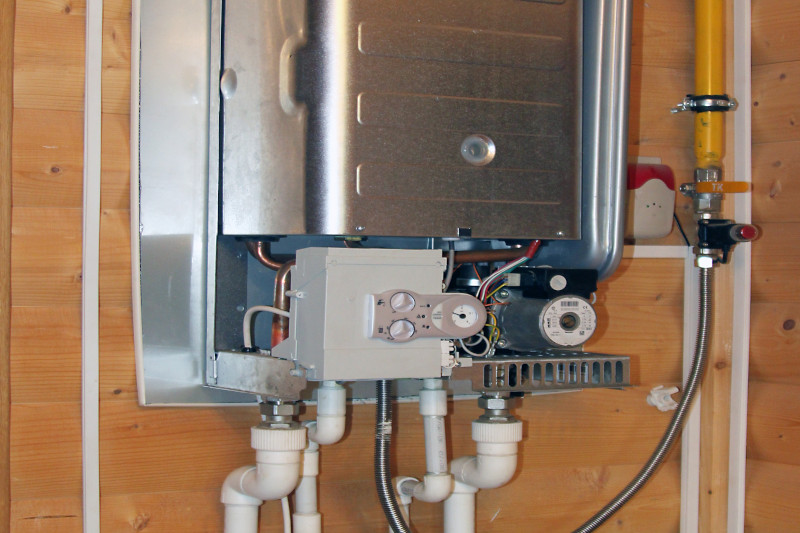
Boiler lockout is the most common reason for an emergency call. Modern boilers are designed to shut down and display a fault code when they detect a problem — this is a safety feature, not a malfunction in itself. The fault code identifies which component has triggered the shutdown. Common lockout causes include ignition failure, flame sensor faults, overheat thermostat trips, low pressure, and flue or ventilation blockages.
In Muswell Hill's hard water area (the water supplied across the N10 postcode is classified as very hard by Thames Water), limescale is a significant contributor to boiler and heating system problems. Scale accumulates on heat exchangers, reducing efficiency and eventually causing overheating, which triggers lockout. A boiler that frequently locks out on overheat, makes kettling or rumbling sounds, or runs significantly longer to reach temperature may have a partially blocked heat exchanger.
Diverter valve failure is a particularly common fault in combi boilers. The diverter valve controls whether heated water is directed to the heating circuit or the domestic hot water supply. When it fails, the boiler typically produces hot water but no heating, or heating but no hot water — the symptoms depend on which position the valve has stuck in. Diverter valve replacement is usually a straightforward repair that restores full boiler function.
Pump failure stops hot water circulating through the heating system. Symptoms include radiators that are warm near the boiler but cold elsewhere in the system, or a boiler that fires but quickly overheats and locks out because water is not circulating. Pump replacement is a common repair on older systems and is usually completed in a single visit.
One of the most common questions during a boiler repair visit is whether it is worth fixing the existing boiler or investing in a replacement. There is no universal answer — the right decision depends on the boiler's age, its repair history, the cost and availability of parts, and the long-term efficiency gains a new boiler would provide.
As a general guide, a boiler under ten years old with no significant repair history is usually worth repairing unless the fault involves a major component such as the heat exchanger. A boiler over fifteen years old that has required repeated repairs may be reaching the end of its economical life, particularly if it is an older non-condensing model, which will be significantly less efficient than a modern condensing replacement.
We give honest advice on this. We have no incentive to recommend unnecessary replacement — our business is built on repeat customers and word-of-mouth recommendation, which means giving you an accurate picture rather than pushing for the larger job. If repair makes more sense, we will say so. If the evidence points toward replacement being the better long-term decision, we will explain why and provide a quote for both options so you can make an informed choice.
Parts availability is also a factor with older boilers. Manufacturers typically guarantee parts availability for ten years after a model is discontinued. Once a boiler is older than fifteen or twenty years, parts may need to be sourced from specialist suppliers, which adds cost and time. If a boiler is repaired but the same component fails again within months because the underlying cause (such as persistent scale or system contamination) has not been addressed, replacement becomes more attractive.
Modern condensing boilers operate at 90% or higher efficiency, compared to 65–75% for older non-condensing models. The fuel saving over several years can offset a significant portion of the replacement cost. We can provide a straightforward calculation based on your current boiler's efficiency and your typical annual gas consumption.
Note the error code displayed (usually a letter and number combination, or a flashing light sequence). You can look up the code in your boiler manual or search online for your specific boiler make and model. Some lockouts can be reset by pressing the reset button; others indicate a fault that needs professional attention. If the boiler locks out again after resetting, call us — repeated lockout means the underlying fault has not been resolved. Do not attempt to bypass any safety device. Call 020 3519 3337 and we can usually attend the same day.
Most boiler repairs are completed in a single visit of one to three hours. If a part needs to be ordered, we will carry out a temporary repair where possible and return once the part has been sourced — typically within one to three working days for common components. We carry a range of common parts in our vans to reduce the need for a second visit where possible.
Unusual noises — particularly kettling, banging or rumbling — usually indicate scale or sludge in the system. While not necessarily dangerous in the short term, these noises indicate that the boiler is working harder than it should and that components are under stress. Continuing to use a noisy boiler without investigation risks heat exchanger failure or other component damage. We recommend booking a diagnostic visit rather than waiting for the boiler to break down completely.
Pressure loss in a sealed central heating system is almost always caused by a leak somewhere in the system, a faulty pressure relief valve releasing pressure, or a failing expansion vessel. Re-pressurising temporarily is fine but the underlying cause needs to be found and fixed. We trace the source of pressure loss and carry out the appropriate repair. Common locations for leaks include radiator valves, boiler internal components, pipe joints and underfloor pipework.
Yes. We carry out repairs on all major boiler brands including Worcester Bosch, Vaillant, Baxi, Ideal, Glow-worm, Potterton, Viessmann, Ferroli, Ariston, Keston, Intergas and others. For some specialist or less common brands, parts may take slightly longer to source, but we will advise on this at the time of diagnosis.